The Ubiquitous Material
Walk through any factory, warehouse, or retail store, and you will encounter polypropylene. It is in the packaging securing pallets, the containers holding food, the carpets on the floor, and the bumpers on cars. According to Wikipedia, polypropylene is a thermoplastic polymer used in a wide variety of applications, including packaging and labeling, textiles, stationery, plastic parts, reusable containers, laboratory equipment, automotive components, and polymer banknotes. Its versatility stems from its unique combination of properties: chemical resistance, fatigue resistance, and cost-effectiveness.
At Jushuo Packaging, we have worked with polypropylene for over a decade, transforming it into high-performance PP strap for industrial packaging applications. The same material properties that make polypropylene ideal for packaging—flexibility, strength, and recyclability—also make it valuable across diverse industries.
1. What Is Polypropylene?
1.1 Material Properties
According to Wikipedia, polypropylene is a thermoplastic polymer produced from propylene monomers. It is known for its high chemical resistance to many solvents, bases, and acids, excellent fatigue resistance, low density (0.90–0.91 g/cm³), and resistance to moisture. These properties determine its suitability for different applications.
Key properties of polypropylene:
| Property | Value | Why It Matters |
| Density | 0.90–0.91 g/cm³ | Lightweight material |
| Melting point | 130–171°C | Thermal stability |
| Chemical resistance | Excellent | Resists many solvents and acids |
| Fatigue resistance | Excellent | Withstands repeated flexing |
1.2 Material Grades
Polypropylene is available in different grades for different applications. According to packaging industry analysis, polypropylene strap is typically manufactured from filament-grade resin with specific viscosity and molecular weight properties. Viscosity control (0.60–0.95 dl/g via SSP) ensures consistent material properties for strapping applications. Jushuo Packaging's SSP technology ensures consistent viscosity and material properties across all production batches.

2. Packaging Applications
2.1 PP Strap and Strapping
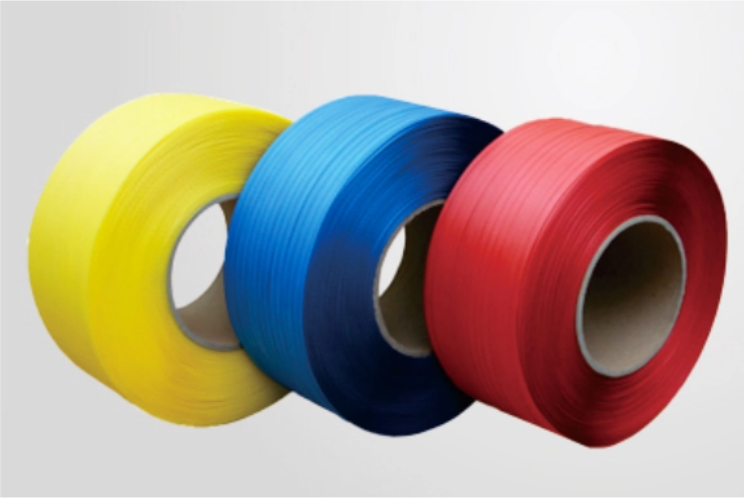
PP strap (polypropylene strap) is one of the most common uses of polypropylene in packaging. According to industry standards, PP strap is available in widths from 5mm to 19mm with break forces from 45kg to 230kg, accommodating everything from light carton sealing to heavy pallet loads. The material’s flexibility and strength make it ideal for:
Carton sealing and reinforcement
Palletizing and unitizing
Bundling and securing
E-commerce fulfillment packaging
Jushuo Packaging manufactures PP strap with 5 PP production lines, SSP viscosity control, and 99%+ pass rates, ensuring consistent performance across all applications.
2.2 Packaging Films and Containers
Polypropylene is also used in packaging films, shrink wrap, containers, and bottle caps. According to industry analysis, polypropylene’s moisture resistance makes it ideal for food packaging and consumer products.
3. Industrial Applications
3.1 Automotive Components
According to Wikipedia, polypropylene is used in automotive components including bumpers, interior trim, and battery cases. Its lightweight and durable properties are particularly valuable in the automotive industry, where weight reduction improves fuel efficiency. Polypropylene's low density (0.90–0.91 g/cm³) makes it much lighter than alternative materials.
3.2 Textiles and Fibers
Polypropylene is used in textiles for carpets, ropes, and technical fabrics. According to textile industry analysis, polypropylene fibers offer excellent abrasion resistance and chemical resistance, making them suitable for industrial textiles and outdoor applications.
4. Consumer Goods Applications
4.1 Reusable Containers and Household Items
According to Wikipedia, polypropylene is used in reusable containers, stationery, and luggage. Its durability and resistance to cracking make it ideal for household products that see repeated use.
4.2 Medical and Laboratory Equipment
Polypropylene’s chemical resistance makes it suitable for laboratory equipment and medical applications. According to industry sources, polypropylene is used in medical devices and labware that requires sterilization resistance.
5. Why Polypropylene Is Ideal for Strapping
5.1 Key Properties for Packaging
Polypropylene’s material properties make it particularly suitable for strapping applications:
Elastic recovery: Absorbs shock during handling and transport
Lightweight: Reduces shipping costs and handling fatigue
Chemical resistance: Maintains performance in varied environments
Cost-effectiveness: Economical for high-volume applications
According to packaging industry analysis, PP strap’s elastic recovery—its ability to stretch under load and return to original length—makes it ideal for securing loads that settle or shift during transport. For stable loads, PP maintains tension well; for loads that expand or contract, PP adapts without excessive relaxation.
5.2 Sustainability Aspects
Polypropylene is fully recyclable, making it a more sustainable packaging choice compared to some alternatives. According to recycling industry analysis, PP recycling infrastructure is widely available in Europe and North America, enabling responsible end-of-life management for strapping materials.
Summary
Polypropylene is one of the most versatile thermoplastics in the world, with applications spanning packaging, automotive, textiles, and consumer goods. In packaging, PP strap is among the most common applications, offering a unique combination of strength, flexibility, and cost-effectiveness for light to medium-duty strapping. Its material properties—including low density, chemical resistance, and elastic recovery—make it ideally suited for securing loads in logistics, e-commerce, and general manufacturing operations.
Procurement professionals should choose polypropylene strap based on application requirements and equipment compatibility. For light to medium loads, PP strap provides the most cost-effective solution.
Jushuo Packaging offers comprehensive PP strap solutions with customizable specifications, documented quality assurance, and supply chain reliability. Our manufacturing capabilities—5 PP production lines with 20,000 tons annual capacity, SSP viscosity control from 0.60 to 0.95 dl/g, and 99%+ pass rates—ensure consistent performance across all specified dimensions. We support clients through every stage of the selection and application process.
If you need assistance selecting the right PP strap for your application or have questions about material specifications, please send an email to sales@jushuopackaging.com, and our professional team will provide one-on-one support.
References
Wikipedia. “Polypropylene – Properties and Applications.” Wikipedia.org, 2026.
ASTM International. “ASTM D3950 – Standard Specification for Strapping, Flat Steel and Seals.” ASTM.org, 2021.
European Committee for Standardization. “EN 13394:2001 – Packaging – Strapping – Specifications for Polypropylene Strapping.” CEN.eu, 2001.
American Chemistry Council. “Polypropylene (PP) – Material Properties and Applications.” plastics.americanchemistry.com, 2024.
International Organization for Standardization. “ISO 9001:2015 – Quality Management Systems – Requirements.” ISO.org, 2015.

 English
 العربية
 Français
 Русский
 Español
 Português
 Deutsch
 italiano
 日本語
日本語 한국어
한국어 Nederlands
 Tiếng Việt
 ไทย
ไทย Polski
 Türkçe
 አማርኛ
አማርኛ ພາສາລາວ
 ភាសាខ្មែរ
 Bahasa Melayu
 ဗမာစာ
ဗမာစာ தமிழ்
தமிழ் Filipino
 Bahasa Indonesia
 magyar
 Română
 Čeština
 Монгол
 қазақ
қазақ Српски
 हिन्दी
 فارسی
فارسی Kiswahili
 Slovenčina
 Slovenščina
 Norsk
Norsk Svenska
 українська
 Ελληνικά
 Suomi
Suomi Հայերեն
 עברית
עברית Latine
 Dansk
Dansk اردو
اردو Shqip
Shqip বাংলা
বাংলা Hrvatski
 Afrikaans
 Gaeilge
 Eesti keel
 Māori
Māori සිංහල
සිංහල नेपाली
 Oʻzbekcha
 latviešu
 অসমীয়া
 Aymara
 Azərbaycan dili
 Bamanankan
 Euskara
 Беларуская мова
 भोजपुरी
 Bosanski
 Български
 Català
 Cebuano
 Corsu
Corsu ދިވެހި
 डोग्रिड ने दी
 Esperanto
 Eʋegbe
 Frysk
Frysk Galego
 ქართული
 guarani
 ગુજરાતી
 Kreyòl ayisyen
 Hausa
Hausa ʻŌlelo Hawaiʻi
 Hmoob
Hmoob íslenska
 Igbo
Igbo Ilocano
 Basa Jawa
 ಕನ್ನಡ
ಕನ್ನಡ Kinyarwanda
 गोंगेन हें नांव
 Krio we dɛn kɔl Krio
 Kurdî
Kurdî Kurdî
Kurdî Кыргызча
 Lingala
 Lietuvių
 Oluganda
 Lëtzebuergesch
 Македонски
 मैथिली
 Malagasy
 മലയാളം
 Malti
Malti मराठी
मराठी ꯃꯦꯇꯥꯏ (ꯃꯅꯤꯄꯨꯔꯤ) ꯴.
 Mizo tawng
 Chichewa
 ଓଡ଼ିଆ
ଓଡ଼ିଆ Afaan Oromoo
 پښتو
پښتو ਪੰਜਾਬੀ
 Runasimi
 Gagana Samoa
 संस्कृत
 Gaelo Albannach
 Sepeti
 Sesotho
 chiShona
 سنڌي
سنڌي Soomaali
 Basa Sunda
 Wikang Tagalog
 Тоҷикӣ
 Татарча
 తెలుగు
 ትግንያውያን
 Xitsonga
 Türkmençe
 संस्कृत
 ئۇيغۇرچە
 Cymraeg
 isiXhosa
 ייִדיש
 Yorùbá
 isiZulu


