Please Choose Your Language
Home » Blog » PET Strap » Choosing the Right Cotton Bale Strap for Export

Choosing the Right Cotton Bale Strap for Export

Views: 0     Author: Site Editor     Publish Time: 2026-02-03      Origin: Site

Inquire

facebook sharing button
twitter sharing button
line sharing button
wechat sharing button
linkedin sharing button
pinterest sharing button
whatsapp sharing button
kakao sharing button
sharethis sharing button

To choose the bestcotton bale strap for export, you should look for high-performance PET binding that is stronger, more resistant to environmental damage, and less expensive than standard steel options. Modern cotton bale straps meet international shipping standards and put sturdiness, safety, and ecology at the top of their list of priorities. As part of the selection process, the load needs, environmental conditions, and provider skills must all be carefully looked at to make sure that the cargo is protected as best possible during long-distance travel. When export workers plan successful cotton packaging strategies, they need to think about things like break force ratings, UV resistance, and the ability to make changes.


cotton bale strap


Understanding Cotton Bale Straps and Their Importance in Export


As the main way to keep compressed cotton safe during shipping and storage, cotton bale straps are an important part of the global cotton export business. These specialized strapping solutions have changed a lot over the years, from using older materials to using modern PET (Polyethylene Terephthalate) formulas that work better. Steel alternatives are being replaced with polypropylene ones because the industry wants better, more eco-friendly packing options that still do a great job of keeping loads inside.

High-quality PET materials are used in modern cotton bale strapping. These materials have a tensile strength of 180 to 1360 kg/m2, based on the thickness and width requirements. The makeup of the material has low elongation qualities, which means that the tension stays the same even during long shipping times. Because they are resistant to heat, these straps can work successfully in a wide range of temperature conditions, from warm shipping areas to cold storage facilities.

The fact that PET strapping is flexible makes it much better than hard options because it can absorb shock loads while still keeping the purity of the cargo. This elasticity is especially helpful when cotton bales are being moved and go through rounds of being compressed and expanded. The strapping can change to keep the right stress levels.

Because they are made of recyclable materials and have less of an effect on the environment than steel options, PET cotton bale straps help make packing more environmentally friendly. Because PET materials don't rust, there are no worries about contamination, and their good looks make products look better. These traits are in line with growing demands for companies to be more environmentally friendly and with international rules about the environmental impact of packaging materials used for export.

Because PET strapping is light, it makes shipments lighter, which lowers the cost of shipping and the amount of carbon dioxide released during freight operations. The smooth finish also keeps cotton fibers and packing materials from getting damaged, which cuts down on waste and improves the quality of the product when it arrives.


Key Criteria for Selecting Cotton Bale Straps for Export


To choose the right cotton PET strap, you need to carefully look at a number of performance factors and business needs. To find the best strapping options that balance performance and cost-effectiveness, export experts have to look at the features of the load, the shipping conditions, and the need to follow regulations.

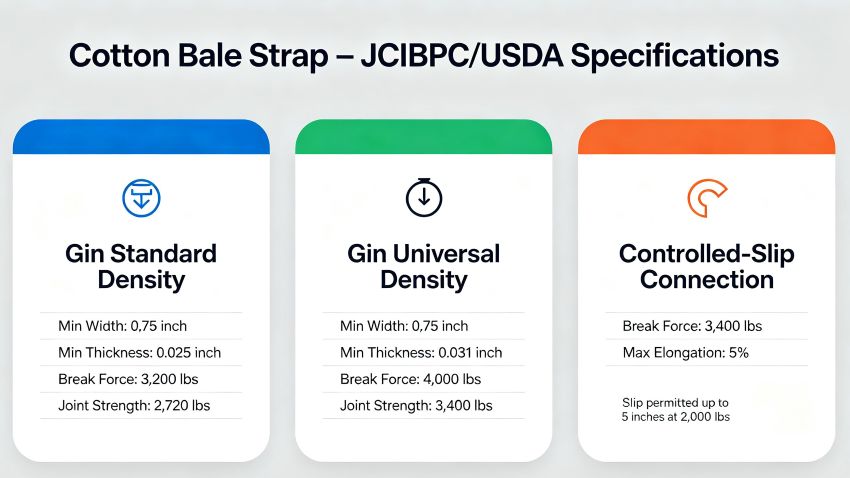
Cotton bales usually weigh between 200 and 500 kilograms, so strapping with the right break force ratings is needed to keep things safe all along the supply chain. The number of straps needed per bale and the total cost of packing depend on the relationship between the weight of the bale, the width of the strap, and its tensile strength. Professional-grade PET strapping comes in widths ranging from 9 to 25 millimeters and thicknesses ranging from 0.4 to 1.25 millimeters, so it can be easily adjusted to fit different loads.

To do a proper load estimate, you need to take into account the dynamic forces that happen during storage, shipping, and handling. These forces can be much higher than the steady weights of the bales, especially when the crane is loading, the truck is moving over rough terrain, or the ship is moving in rough seas.

During the different stages of foreign shipping, cotton for export meets many environmental problems, such as UV exposure, changes in temperature, and changes in moisture levels. High-quality PET strapping is resistant to UV light, which keeps the material's structure during long periods of storage outside and transporting goods on deck. Stable temperatures ensure uniform performance from warm ports of entry to temperate markets of exit.

PET materials are resistant to chemicals that are often found in the shipping environment. These include salt spray, industrial pollutants, and cleaning chemicals used in facilities that handle goods. This resistance keeps the strap working well and keeps cotton goods from getting dirty.

Automated tying systems are being used more and more in modern cotton production plants to make them more efficient and consistent. The fact that PET strapping can be used with both gas and electric strapping tools cuts down on labor costs and makes sure that all bales are strapped evenly. Good PET materials have smooth surfaces that make running through automatic equipment easy and reliable, without any problems with getting stuck or not being lined up right.

PET strapping can be sealed with both friction welding and metal clip closing systems, so it works with a wide range of tools. Because of this, facilities can make the best use of their strapping methods based on the tools they already have and how they like to run their business.


How to Choose the Best Cotton Bale Strap Brand and Supplier?


Choosing the right supplier has a big effect on how well the cotton baling straps work, how reliable the supply chain is, and how much the whole package costs. Cotton exporters with a lot of experience look at possible partners' manufacturing skills, quality certifications, and levels of service support to build partnerships that will last.

Leading strapping makers spend money on cutting edge production technologies and quality control systems that make sure their products always work well. To keep tight tolerances across production runs, cutting-edge facilities use controlled cooling systems, automatic testing equipment, and precise molding processes. Manufacturers of good products use thorough testing methods to check the tensile strength, elasticity, and resistance to external factors.

Another important evaluation factor is manufacturing capacity, since cotton export businesses need to be able to rely on a steady supply of goods during busy shipping times. Well-known brands keep enough stock on hand and can change how they make things to adapt to changing demand patterns without affecting delivery times or quality.

Professional strapping suppliers keep up-to-date certifications in their fields that show they follow international quality standards and government rules. ISO certification makes sure that quality control systems and manufacturing methods are always the same. Environmental certificates back up policies and practices for sustainable production that help companies meet their social responsibility goals.

Following the rules is especially important when sending cotton to other countries, because the countries that receive the cotton may have specific rules or standards for the packing material. Suppliers with a lot of experience know these rules and can provide proof that they follow the rules that apply.

When cotton is exported, companies often need custom strapping solutions with business names, color coding, or specific size needs. More advanced makers can print marks that last forever without affecting the performance or durability of the strap. Customizing colors makes it possible to keep track of goods and identify brands all along the supply chain.

Professional sellers offer technical support services that set them apart from commodity providers. These services offer help with application improvement, equipment compatibility, and fixing problems. This help is useful during the initial stages of implementation and during ongoing activities when problems appear.


Procurement Guide: How to Buy Cotton Bale Straps for Export?


Total cost of ownership is minimized by good buying strategies, which also make sure that the supply chain works reliably. Structured buying methods that take into account both short-term and long-term operating needs as well as market changes are good for cotton export businesses.

The amount of cotton that is exported has a direct effect on how things are bought and how prices are negotiated. Large-scale businesses can use volume agreements to get better price and supply priority during times of high demand. Knowing how cotton is exported during different times of the year lets you plan your inventory in a way that balances costs and supply security.

Pricing systems are very different depending on how much you order, when you want it delivered, and how you want to pay. To find the best deals, professional buying teams look at the total supplied costs, which include freight, handling, and inventory carrying costs. Long-term supply deals often keep costs stable and make sure that capacity is used during times of high demand.

To keep production from stopping and too much inventory from being bought, international strapping supply lines need to carefully handle wait times. The usual wait time is between two and eight weeks, but it depends on how customized the product needs to be, how many are ordered, and where the seller is located. Because cotton exports are seasonal, you need to plan ahead to make sure you have enough cotton PET strap during the busiest shipping and ginning times.

Strategies for managing inventory must weigh the costs of keeping items in stock against the risk of running out, especially for businesses that are located in rural areas or areas where suppliers are hard to reach. To keep operations running smoothly, safety stock estimates take into account changes in demand, the dependability of suppliers, and the time it takes to restock.

Thorough quality control measures keep out low-quality materials that could risk the safety of goods or break equipment. Incoming inspection methods, batch testing procedures, and performance tracking systems that keep track of strap performance over time are all parts of effective programs. Sample testing checks the tensile strength, precision of measurements, and material makeup against the requirements.

Documentation standards help with quality control and make it possible to track things for legal compliance and guarantee claims. Material certifications, test results, and conformance statements that show compliance with standards are all examples of proper paperwork.


Comparing Cotton Bale Strap Options: Making the Right Decision for Export Needs


Comparing all of the available binding options in detail lets you make an informed choice that improves performance while keeping costs low. Exporters of cotton need to look at a number of different material and configuration choices in order to find the best solutions for their unique needs and limitations.

Because PET strapping is safer and works just as well as steel strapping, it has mostly replaced steel strapping in cotton export uses. Steel strapping has the highest tensile strength, but PET materials are safe enough for cotton bales and don't have any sharp edges or rust issues. The lighter weight of PET wrapping lowers the cost of shipping and the amount of work that needs to be done to handle it.

Performance studies show that PET strapping that is properly defined keeps its strain better than steel over long periods of time. PET is flexible, so it can adapt to moving goods without losing its ability to hold it in place. Steel strapping, on the other hand, may come loose or break under dynamic loading conditions.

The initial cost of the materials is only one part of the total cost of strapping. Other costs, like handling, tools, and safety rules, add up quickly. Even though the unit price of PET strapping is higher, the total cost is often cheaper because less work is needed, safety equipment is not needed, and equipment maintenance costs are lower.

Direct costs, like the price of materials, the cost of shipping, and the cost of storing them, should be included in a quantitative analysis. So should indirect costs, like insurance fees, safety training, and possible liability risks. When making long-term cost estimates, it's helpful to think about things like stable prices, dependable suppliers, and new technologies.

Depending on the type of bag, how it is handled, and how it is transported, different cotton export uses may need different strapping standards. Dense cotton bales that are handled roughly need higher break force ratings than smaller bales that are moved in controlled conditions. When compared to short-haul trucking, ocean freight uses benefit from better protection against UV light and salt spray.

For specific uses, like exporting organic cotton, there may be extra rules about what the material is made of and how it is processed. Understanding these application-specific needs is important for choosing the right product and getting the best results.


Conclusion


To choose the best cotton bale strap for exporting, you need to carefully think about your performance needs, the supplier's skills, and the total cost. Compared to older options, modern PET binding solutions are safer, better for the climate, and better at their job. They also meet the strict needs of the international cotton trade. To be successful, you need to know how to evaluate suppliers and make the best purchases while also being aware of the load requirements, weather conditions, and working limits. Investing in good strapping solutions pays off by making shipping safer, lowering the cost of handling it, and improving the speed of operations all along the export supply chain.


FAQ


What factors determine cotton bale strap strength requirements?

How strong a cotton bale strap needs to be depends on how heavy the bale is, how dense it is compressed, and how it will be handled during the export trip. Heavy bales (more than 400 kg) usually need strapping with a break force value of more than 800 kg, while smaller bales may be fine with materials rated at 400 to 600 kg. When cranes are being moved, trucks being moved, or ships moving, dynamic loading factors can increase static loads by 200 to 300 percent. This means that the right safety gaps must be used when choosing straps.


How do PET cotton bale straps compare environmentally to other materials?

PET strapping is better for the earth because it can be recycled, has a smaller carbon footprint, and doesn't get contaminated by rust. Unlike steel options, PET materials don't need to be coated to protect them, and they don't get rusty while being stored or transported. The straps' light weight means they use less fuel while being shipped, and their reusable material supports the ideas of the cycle economy when they are thrown away.


What are typical lead times for bulk cotton bale strap orders?

Standard orders for PET straps usually take two to four weeks to arrive for amounts up to fifty tons. Larger orders or orders with specific requirements may take six to eight weeks. Demand trends that change with the seasons during the cotton crop can make lead times longer. This shows how important it is to plan ahead and handle inventory strategically. Orders placed in an emergency may be processed faster, but there is usually an extra charge for rush services.


Can cotton bale straps be customized with company logos or markings?

Modern companies that make PET binding give customers a lot of ways to customize it, such as writing logos, changing colors, and changing the size. When you print something well, the lines stay there even after regular handling and don't fade, scratch, or react with chemicals. Customization choices help with identifying a brand, keeping track of inventory, and meeting regulatory standards while keeping all performance characteristics.


What width and thickness specifications work best for cotton export applications?

Strapping with lengths between 15 and 25 millimeters and thicknesses between 0.8 and 1.25 millimeters is usually used for cotton exports because it strikes the best balance between strength and material efficiency. Wider strapping better spreads weight across the cotton's surface areas, lowering the risk of pressure buildup and fiber damage. Choosing the right thickness depends on the break force rates that are needed. For example, thicker materials are needed for heavier bales to provide enough protection.


Partner with Jushuo Packaging for Superior Cotton Bale Strap Solutions


Jushuo Packaging offers the best PET cotton bale strap options in the business, designed to meet the needs of demanding export uses. Our advanced production plant uses Italian screen changers and precise cold-drawing technology to make strapping that is stronger and more consistent in size. We have been specializing in packing materials for more than ten years and produce more than 20,000 tons of them every year. We can provide a dependable supply capacity and full technical support. Get in touch with our knowledgeable staff at sales@jushuopackaging.com to talk about your cotton bale strap needs and get unique solutions that make your export operations run more smoothly.


References


Cotton Marketing and Trade Association. "Best Practices for Cotton Bale Packaging and Export Standards." International Cotton Export Guidelines, 2023.

International Packaging Institute. "Comparative Analysis of Industrial Strapping Materials for Agricultural Export Applications." Packaging Technology Review, Vol. 45, 2023.

Global Logistics and Supply Chain Management Journal. "Environmental Impact Assessment of Packaging Materials in International Trade." Sustainability in Shipping, Issue 12, 2023.

Agricultural Export Safety Commission. "Guidelines for Safe Handling and Transportation of Compressed Agricultural Products." Export Safety Standards Manual, 2023.

World Trade Organization. "Technical Barriers to Trade: Packaging Material Requirements in International Commerce." WTO Technical Report Series, 2023.

International Organization for Standardization. "Quality Management Systems for Industrial Packaging Materials: ISO 9001 Implementation Guide." Standards Documentation, 2023.


KEEP IN TOUCH WITH US

Recommended products

  • Quick View
    Strap For Cotton Bale
    Quantity:
    Stock 0
    Add to Basket
    Strap For Cotton Bale
    Brand:
    Product Code:
    Model:
    Brief:
    PET strap with smooth surface, commonly known as plastic steel strapping, is currently a new type of eco-friendly packaging material used worldwide to replace steel strapping & PP strapping..
    ● Strong tensile strength, Low elongation, Strong heat resistance
    ● Good flexibility, Aesthetically pleasing & rust-free
    ● Width (mm): 9-25
    ● Thickness (mm): 0.4-1.25
    ● Break force (kg): 160-1360
    ● Color, logo, printed characters customized accept
    ● Application: Cotton, wood, electronics, bricks, ceramics, building materials...
     
    Mobile/WhatsApp: +86 158 9568 0139
    Email: sales@jushuopackaging.com
  • Quick View
    Polyester Pet Strap
    Quantity:
    Stock 0
    Add to Basket
    Polyester Pet Strap
    Brand:
    Product Code:
    Model:
    Brief:
    PET strap with smooth surface, commonly known as plastic steel strapping, is currently a new type of eco-friendly packaging material used worldwide to replace steel strapping & PP strapping..
    ● Strong tensile strength, Low elongation, Strong heat resistance
    ● Good flexibility, Aesthetically pleasing & rust-free
    ● Width (mm): 9-25
    ● Thickness (mm): 0.4-1.25
    ● Break force (kg): 160-1360
    ● Color, logo, printed characters customized accept
    ● Application: Cotton, wood, electronics, bricks, ceramics, building materials...
     
    Mobile/WhatsApp: +86 158 9568 0139
    Email: sales@jushuopackaging.com
  • Quick View
    Automatic PP Strap
    Quantity:
    Stock 0
    Add to Basket
    Automatic PP Strap
    Brand:
    Product Code:
    Model:
    Brief:
    Automatic PP Strap delivers precision-engineered performance for demanding, high-speed packaging lines, featuring:
    ● Main width: 5mm, 8mm, 9mm, 12mm;
    ● Seamless compatibility with imported full-auto machines;
    ● Exceptional high tensile strength;
    ● Strong and reliable heat-seal joints;
    ● Lightweight material for optimal efficiency.
  • Quick View
    High Strength PP Strap
    Quantity:
    Stock 0
    Add to Basket
    High Strength PP Strap
    Brand:
    Product Code:
    Model:
    Brief:
    Trusted as a Manufacturer & Supplier, Jushuo Packaging offers high-strength PP strap built for demanding applications, featuring:
    ● Superior tensile force for heavy loads;
    ● Secure adhesion for joint integrity;
    ● Consistent, reliable quality;
    ● Robust performance under stress.
Jushuo Packaging is a OEM manufacturer of high-performance PP & PET straps, deliver zero-defect quality,
30- 50% cost savings vs steel, just-in-time delivery. Innovating for global industries with 10+ Yrs expertise.

PRODUCT CATEGORY

QUICK LINKS

CONTACT JUSHUO
Taixing Jushuo Technology Co.,Ltd.
Contact: Ms.Laura Yu
Mobile/WhatsApp: +86 158 9568 0139
Contact: Manager Mr. Zhang
Tel: +86 176 1218 1800
Email: sales@jushuopackaging.com
Please Choose Your Language
Subscribe to our newsletter
Promotions, new products and sales. Directly to your inbox.
     
Copyright © 2025 Taixing Jushuo Technology Co.,Ltd.   All Rights Reserved.| Sitemap