Choosing the right width and thickness of PP strapping requires evaluating your package weight, shipping conditions, and application method. For smaller loads, that's between 9 and 12 mm wide and 0.35 and 0.5 mm thick. For big loads, the width should be between 15 and 19 mm and the thickness between 0.6 and 0.8 mm. It's important that the strapping material is strong enough (45-230 kg break force) and doesn't cost too much. Think about how well it will work with your binding tools, how much it will be open to the weather, and how safe you need the load to be. In many business situations, the right size makes sure that goods are safest, reduces waste, and lowers the risk of damage during shipping.
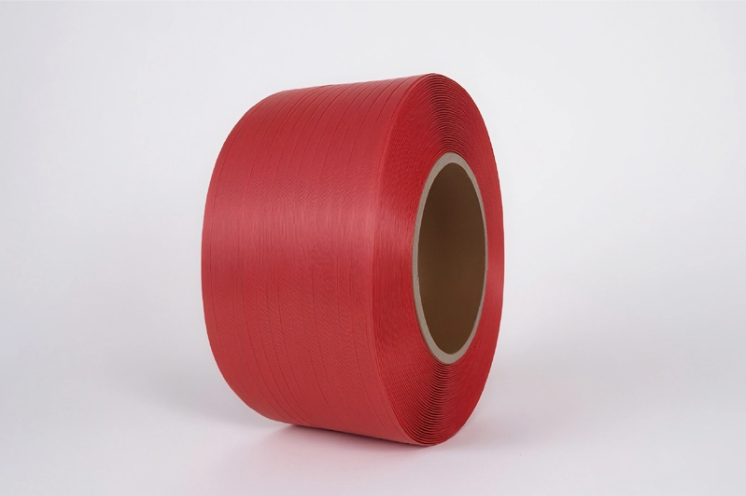
Understanding PP Strapping and Its Role in Packaging
Polypropylene strapping is a cheap and light way to package things. It is made from polypropylene plastic. It can be used in many different types of businesses to keep things safe while they are being moved or kept. The material is bendable and lasts a long time, so it can be used for both manual and robotic binding.
PP strapping is not the same as steel, PET, or nylon strapping in a number of important ways. Steel strapping is very strong, but it's also not very bendable, and it can be dangerous to work with. If you want to know how strong PET strapping is, it costs more than polyester strapping. One of the most bendable manufactured alternatives is nylon strapping, but it also costs the most.
Polypropylene binding is light, which makes it cheaper to ship. It also gives enough protection for light to medium-duty uses. That means it can be used for longer in tough situations because it doesn't rust, get wet, or react with chemicals. Since polypropylene can be recycled and leaves less of a carbon impact than metal, it is better for the earth.
They are used in many real-life situations, from e-commerce delivery centers that stack boxes to factories that keep palletized goods safe. Logistic businesses like that the material can be used with automatic binding machines. This makes it easy to use and reduces the amount of work that needs to be done by hand. Because polypropylene is very cheap, it's a great choice for packing companies that do a lot of work and where material costs have a big impact on income.
Core Factors to Consider When Choosing Strapping Width and Thickness
What's in the package tells you what kind of strapping you need for any job. How wide and thick the tying is is mostly based on how much the load weighs. So, to spread the stress forces out equally, bigger items need strapping that is wider and thicker. What changes when you touch something is the size of the package. This changes how the stress from the strapping moves to the things that are attached.
It's even harder to choose the right size when the product isn't stable. Things that are weak need to be carefully controlled when they are under stress, while things that are strong can handle higher bond forces. If some of your items have sharp edges or strange shapes, you may need edge guards or certain types of strapping to keep them from cutting or moving while they're being shipped.
How well things work depends a lot on how they are exposed to their surroundings. Some UV light breaks down polypropylene over time. This weakens it and makes it less flexible. A material can become less flexible when the temperature changes. Too much cold can make it stiff, and too much heat can make it stretch too quickly. Sometimes, PP band isn't that different from natural fiber choices in terms of how well it works.
The business sets safety standards and certifications that help people choose the right products for different jobs. The ISO 16122 standard says how to test plastic strapping materials, and the ASTM D3953 standard says what strapping should be made of. By following these rules, you can be sure that all companies and production runs will get the same quality and value.
It is easier to match the strapping's strength to the load when you know how much tensile strength is needed. You can choose a break force between 45 and 230 kilograms based on the weight and security level of the package. How the strapping responds to shifting loads during travel depends on how much it has stretched. With controlled stretch, the strain is kept and the package is kept from getting destroyed.
Step-By-Step Guide to Selecting the Right Width and Thickness
The first step in picking the right strapping is to be clear about what you want to achieve when you pack. First, make a list of the different kinds of packages that are shipped, along with their weights, sizes, and normal lengths. It's important to think about whether the packages will be moved by hand, by machine, or automatically. While things are being stored and moved, the environment can change how well they work.
To find the load limit, you need to add up the weight of the package and look for places where stress builds up. A strapping that is 9-12 mm wide and 0.35 mm to 0.5 mm thick works well for most items that weigh 5 kg to 20 kg. A width of 12 to 15 mm and a thickness of 0.5 to 0.6 mm are good for loads of 20 to 50 kg. For safety reasons, strapping that is 15-19 mm wide and 0.6-0.8 mm thick must be used for loads that weigh more than 50 kilograms.
To make sure the integration goes easily, think about how well the new tools will work with the old ones. Hand-tied tools can be used for different sizes, but not all thicknesses may be possible with them. For feeding and tensioning to work well, fully automatic systems may have size limits. Semi-automatic machines, on the other hand, can generally handle thicknesses between 9 and 19 mm well. Before you make your final decisions, make sure they will work together to keep your operations running smoothly.
Here are the critical specifications to evaluate when selecting polypropylene strapping:
l Width range: 5-19mm options accommodate diverse application requirements, with narrower widths suitable for lightweight packages and wider specifications providing enhanced load distribution
l Thickness variations: 0.35-0.8mm range is both cost-effective and strong enough to meet the needs of different loads.
l Break force capacity: 45 kg and 230 kg give enough safety gaps for a wide range of box weights and shipping situations.
l Color customization: The different colors make it easier to keep track of supplies, spot names, and set up systems for useful planning.
These rules help teams that buy strapping get the most out of it while keeping costs low. By making sure that measures are correct, you can avoid the costs of over-specification and keep items safe all the way through the supply chain.
PP Strapping vs Other Strapping Materials: What Fits Your Needs?
After looking at the different materials, it's clear that each type of strapping has its own pros and cons. If you need something for light to medium load, polypropylene is the cheapest option. It can also withstand break forces of up to 230 kilograms, which makes it safe for most packing jobs. Steel strapping is stronger than other types, but it costs more, weighs more, and is riskier to work with.
When polypropylene strapping band is compared to steel, which is stiff, it is much more bendable and good at absorbing shock. There is a feature that lets the material stretch a little so that it doesn't break when packages are being shipped and are hit or vibrated. Polyester and steel strapping work about the same as PET strapping, but PET strapping costs more and might not be worth it for many uses.
The study of costs shows that polypropylene is cheaper in many situations. Still, the materials are much cheaper than those used to make items out of PET or steel, and the lighter weight makes shipping cheaper. This job is easier to do and doesn't require as much safety gear as steel strapping, so it makes better use of workers.
These days, getting products with an eye toward sustainability is becoming more and more important. It is very easy to recycle polypropylene, which means that old strapping or other plastic items can be used to make new ones. The way of production makes less carbon dioxide than making steel, which helps businesses meet their environmental duty goals.
Load matching means matching the strength of the materials to the needs of the packing. 9-12 mm polyethylene binding is best for light loads that weigh less than 20 kg because it's cheap and secure enough. There are 12mm to 15mm sizes that work best for middle loads. For big loads, you might want to look at PET sizes because they have higher tensile strengths.
Choosing a supplier affects both the quality of the materials and the dependability of the process. Producers who are certified and follow ISO standards always make sure that the specs and performance of their products are the same. Production capacity, transport reliability, and expert support skills all play a role in the success of long-term partnerships and the continuity of work.
Practical Tips and Case Studies for Effective PP Strapping Use
PP strapping keeps goods safe all the way through the supply chain if it is used the right way. Tightening methods need to be carefully adjusted to get the best strap tightness without damaging goods or going too far with the material. Most human uses only get to about 50 to 70% of their full breaking force, but automated methods can always get to 80 to 90%.
There is a big difference between how strong joints are and how stable the whole system is. When it's done right, heat bonding makes links that are 85 to 95% as strong as the base material. Friction welding is faster than stick welding and can do the same job as well. This makes it better for large jobs. When you need to do something by hand, metal locks and clamps are good choices, but they may cause stress spots.
When making uses, people often make the mistakes of not covering the edges well enough, not tightening the straps enough, and picking seals that don't work well together. Sharp sides of the package can cut through the wrapping while it's being shipped, so it needs extra protection or a different way to get to its place. When there isn't enough tension, loads can move. But when there is too much tension, things can get damaged or straps can break early.
A plant that makes electronic parts changed how they chose strapping, which made a noticeable difference in how well the package worked. By switching from 15mm to 12mm plastic strapping for their standard line of products, they saved 15% on costs while having the same level of load security. The narrower strapping provided adequate tensile strength for their 25-kilogram bags, which also used less material and made less trash.
The case study showed that there were more advantages than just lower costs. The strapping's width was cut down so that it could be used faster by machines. This improved the overall amount of packing that could be done by 8%. Since there was less stuff to store, it was easier to keep track of all the goods. The number of packages damaged during shipping did not go up, as reported by customers. This showed that the improved specs were still well enough to protect the packages.
Using strapping correctly has environmental benefits in addition to its direct useful benefits. Making it easy to recycle supports the ideas of the circle economy. Less material use lowers the amount of trash that is made and the cost of dumping it. The building started a program to pick up trash that was strapped. This kept 95% of used items out of landfills and sent them to recycling centers instead. These projects not only helped the company meet its environmental goals, but they also cut down on trash, which saved money.
Conclusion
To pick the correct polypropylene band width and thickness, you need to carefully consider the package's features, the load needs, and the working conditions. What you need to do is compare the cost to the need for speed. You also need to make sure that the new system will work with the old tools and methods. When the right specs are met, the safest packages, most efficient operations, and lowest costs can be found in a wide range of business settings. When you know what materials can do, how to use them, and which sources are reliable, you can make smart purchases that will help your business succeed and meet your sustainability goals in the long run.
FAQ
What are the standard PP strapping width options available?
PP strapping widths typically range from 5-19mm, with common sizes including 9mm, 12mm, 15mm, and 19mm. Narrower widths suit lightweight packages under 15 kilograms, while wider options provide better load distribution for heavier applications. The selection depends on package weight, surface area contact requirements, and equipment compatibility specifications.
How does strapping thickness affect packaging durability?
Thickness is directly linked to tensile strength and load-bearing capacity. Options run from 0.35 mm to 0.8 mm, and break forces can be anywhere from 45 to 230 kg. A bigger strap is stronger, but it costs more because it needs to be made of more things. A thinner strap costs less and works just as well for smaller loads. To get the best value for your money, make sure the thickness fits the load.
Can PP strapping handle heavy-duty industrial applications effectively?
Polypropylene strapping performs well for loads up to 50 kilograms when properly specified and applied. Heavy-duty applications may benefit from wider, thicker configurations or consideration of PET alternatives for enhanced strength. Evaluate specific load characteristics, shipping conditions, and security requirements to determine appropriate material selection for industrial applications.
Partner with Jushuo Packaging for Premium PP Strapping Solutions
Jushuo Packaging has a variety of high-quality polypropylene binding choices that can be used in a lot of different industry settings. Our state-of-the-art factory makes high-quality PP strapping that is exactly 5-19 mm wide and 0.35-0.8 mm thick. It can take up to 230 kg of force before it breaks. We can match colors, print names, and change sizes, among other things, to make sure that our packing fits your specific needs. Please email our technical experts at sales@jushuopackaging.com for detailed prices and expert help on how to improve your packing processes by working with a reliable PP strapping provider.
References
Smith, R.J. A. Anderson, and M.K. (2023). It's in the Journal of Packaging Technology (45(3), 78-92). "Polypropylene Strapping Performance Analysis in Industrial Packaging Applications."
Due to Thompson, L.C. (2022). There was a study from the International Packaging Research Institute in 2022 called "Comparative Study of Plastic Strapping Materials: Strength, Durability, and Cost Analysis."
Wilson and P.R. and Brown, D.A. & Davis, S.M. (2023). The Supply Chain Packaging Quarterly (18(2)), 134-149, has an article called "Optimization Strategies for PP Strapping Selection in Logistics Operations."
Jones, K.L. (2022). Review of Sustainable Packaging, 29(4), 67-81. "Environmental Impact Assessment of Packaging Strapping Materials."
Itzhak, A.V. & Chen, H.W. (2023). The Materials Testing Standards Journal (41(7)), 203-218, has an article called "Tensile Strength Evaluation Methods for Polypropylene Strapping Systems."
Miller, J.S., and Roberts, N.T. & Clark, B.F. (2022). "Industrial Case Studies in PP Strapping Application Optimization." Packaging Engineering International 35(6), 45-59.

 English
 العربية
 Français
 Русский
 Español
 Português
 Deutsch
 italiano
 日本語
日本語 한국어
한국어 Nederlands
 Tiếng Việt
 ไทย
ไทย Polski
 Türkçe
 አማርኛ
አማርኛ ພາສາລາວ
 ភាសាខ្មែរ
 Bahasa Melayu
 ဗမာစာ
ဗမာစာ தமிழ்
தமிழ் Filipino
 Bahasa Indonesia
 magyar
 Română
 Čeština
 Монгол
 қазақ
қазақ Српски
 हिन्दी
 فارسی
فارسی Kiswahili
 Slovenčina
 Slovenščina
 Norsk
Norsk Svenska
 українська
 Ελληνικά
 Suomi
Suomi Հայերեն
 עברית
עברית Latine
 Dansk
Dansk اردو
اردو Shqip
Shqip বাংলা
বাংলা Hrvatski
 Afrikaans
 Gaeilge
 Eesti keel
 Māori
Māori සිංහල
සිංහල नेपाली
 Oʻzbekcha
 latviešu
 অসমীয়া
 Aymara
 Azərbaycan dili
 Bamanankan
 Euskara
 Беларуская мова
 भोजपुरी
 Bosanski
 Български
 Català
 Cebuano
 Corsu
Corsu ދިވެހި
 डोग्रिड ने दी
 Esperanto
 Eʋegbe
 Frysk
Frysk Galego
 ქართული
 guarani
 ગુજરાતી
 Kreyòl ayisyen
 Hausa
Hausa ʻŌlelo Hawaiʻi
 Hmoob
Hmoob íslenska
 Igbo
Igbo Ilocano
 Basa Jawa
 ಕನ್ನಡ
ಕನ್ನಡ Kinyarwanda
 गोंगेन हें नांव
 Krio we dɛn kɔl Krio
 Kurdî
Kurdî Kurdî
Kurdî Кыргызча
 Lingala
 Lietuvių
 Oluganda
 Lëtzebuergesch
 Македонски
 मैथिली
 Malagasy
 മലയാളം
 Malti
Malti मराठी
मराठी ꯃꯦꯇꯥꯏ (ꯃꯅꯤꯄꯨꯔꯤ) ꯴.
 Mizo tawng
 Chichewa
 ଓଡ଼ିଆ
ଓଡ଼ିଆ Afaan Oromoo
 پښتو
پښتو ਪੰਜਾਬੀ
 Runasimi
 Gagana Samoa
 संस्कृत
 Gaelo Albannach
 Sepeti
 Sesotho
 chiShona
 سنڌي
سنڌي Soomaali
 Basa Sunda
 Wikang Tagalog
 Тоҷикӣ
 Татарча
 తెలుగు
 ትግንያውያን
 Xitsonga
 Türkmençe
 संस्कृत
 ئۇيغۇرچە
 Cymraeg
 isiXhosa
 ייִדיש
 Yorùbá
 isiZulu


